
A356 vs ADC12 for High-Stress Structural Aluminum Parts
By Hank Zhang | Senior Tooling & Manufacturing Expert
Request a QuoteBy Hank Zhang | Senior Tooling & Manufacturing Expert
A few months back, a heavy-machinery procurement lead walked into our office with a blueprint for a high-stress steering knuckle component. His focus was entirely on unit economics. He noted that since standard aluminum alloy ADC12 properties fill high-pressure molds beautifully and keep part costs lean, he wanted to stick with it. I looked at the drawing, noticed the extreme cyclic fatigue parameters, and told him bluntly: " If you cast this specific load-bearing geometry out of ADC12, it won’t just fail; it will snap under impact without warning."
After more than twenty years on the foundry floor, I see this misunderstanding regularly. Engineering teams often select materials based strictly on yield sheets or ease of casting, without accounting for how microstructures handle real-world stress. High-stress structural parts—like suspension arms, heavy-duty mountings, and EV powertrain members—require properties that standard high-pressure die casting alloys simply cannot deliver.
We guided that client to pivot to an A356 material matrix handled via specialized thermal processing. Let’s look at the actual engineering reasons why this choice is vital for critical load-bearing components.
1. The Elongation Deficit: Brittle Fracture vs. Predictable Yielding
When a component faces intense mechanical loads, its ability to bend slightly before breaking—measured as elongation percentage—is its primary defense. This is where the core difference between these two alloys becomes clear.
Standard ADC12 contains high levels of iron (Fe) and silicon (Si) to assist with high-speed tool filling. However, those elements form sharp acicular intermetallic needle structures inside the cooled metal. This limits ADC12’s elongation properties to a rigid 1% to 2%. Under sudden impact or high cyclic fatigue, it behaves like glass—it shatters along brittle micro-crack planes.
Conversely, A356 is a clean aluminum-silicon-magnesium blend. When properly modified, it delivers upwards of 5% to 10% elongation. It absorbs sudden impacts by yielding plastically rather than fracturing catastrophically. For structural components, that difference is a vital safety requirement.
Structural Benchmarking: A356-T6 vs. Raw Conventional ADC12
To clarify these structural differences, look at this breakdown of the raw metallurgical properties our engineering teams manage during DFM analysis:
| Mechanical & Structural Metric | Alloy A356 (With T6 Treatment) | Alloy ADC12 (As-Cast HPDC) | High-Stress Structural Relevance |
|---|---|---|---|
| Elongation % (Ductility) | 5% – 10% | 1% – 2.5% | A356 provides high impact resistance; ADC12 risks sudden brittle failure under stress. |
| Tensile Strength (MPa) | 290 – 310 | 310 – 330 | ADC12 shows high raw hardness, but lacks the necessary toughness for cyclic loads. |
| Thermal Modification Cap | Fully Compatible (T5 / T6) | Incompatible (Risks Blistering) | A356 can be heat-treated to optimize internal crystal grain structures. |
| Internal Porosity Integrity | Ultra-Low (X-Ray Grade) | Micro-Porous (Gas Entrapment) | A356 supports structural weldability and maintains pressure tightness. |
| Primary Processing Fit | Gravity, Low-Pressure, Semi-Solid | High-Pressure Die Casting | A356 fits processes that maximize internal microstructural density. |
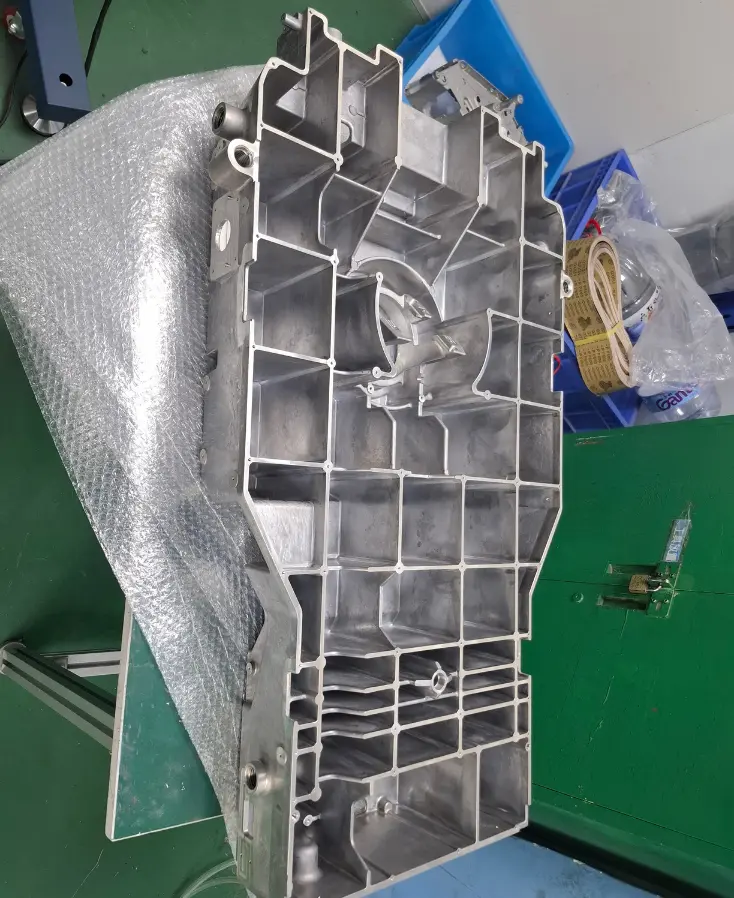 Figure 1: While high-pressure ADC12 works excellently for complex electronic housings, high-stress structural parts demand the dense grain structure of A356.
2. The T6 Thermal Difference: Unleashing Metallurgical Strength
A raw casting is limited by how it solidifies inside the mold. To maximize performance under stress, you need to refine the internal grain layout via heat treatment.
Because A356 contains targeted magnesium (0.25% - 0.45%), it responds exceptionally well to a full T6 solution and aging cycle. This process rounds out silicon particles and precipitates reinforcing phases throughout the matrix.
You cannot put standard high-pressure ADC12 parts through a T6 oven. The extreme injection speeds of conventional casting trap micro-bubbles of air inside the metal. When heated above 500°C, those trapped gases expand, resulting in severe surface blisters that ruin the part. If your component requires structural thermal modification, utilizing an advanced A356 semi-solid casting process allows you to safely leverage T6 performance without porosity issues.
3. Internal Density: Managing Hidden Defects
High structural stress quickly exposes internal flaws. High-pressure die casting with ADC12 is fast and cost-effective, but it naturally leads to minor internal gas porosity. Under normal loads, this is negligible. But if you put that component on a cyclic fatigue tester, those micro-voids become initiation points for stress cracks.
By moving to gravity methods or low-pressure systems running A356, the metal enters the mold smoothly and solidifies under controlled pressure. When paired with strict porosity control and X-ray inspection, we can guarantee a dense internal structure that is stable enough to be safely welded into structural automotive frames.
Frequently Asked Questions (FAQ)
Can ADC12 ever be used for automotive structural parts?
Only if the part is subjected to low, non-cyclic loads and has thick walls designed to compensate for lower ductility. For critical safety components like steering knuckles or control arms, tier-1 automotive standards almost always rule out standard ADC12 in favor of heat-treated A356 or structural semi-solid alternatives. Explore our automotive die casting parts hub to see how we match alloys to specific applications.
Does switching from ADC12 to A356 require different tooling designs?
Yes. A356 is typically cast using gravity, low-pressure, or semi-solid methods, which have different solidification profiles and shrinkage rates than high-pressure die casting. This means you cannot simply pour A356 into an existing high-pressure ADC12 tool. To learn more about tailoring mold parameters for proper solidification, see our ultimate aluminum casting design guide.
How do you prevent blistering when heat-treating structural parts?
We eliminate trapped gases during the casting stage. By using low-turbulence pouring or semi-solid methods, we keep gas from getting trapped in the metal matrix. For a step-by-step look at how we manage these thermal cycles safely, read our guide on how to prevent blistering during aluminum T6 heat treatment.
Protect Your Design from High-Stress Structural Failure
An unexpected part failure on an assembly line or out in the field can damage a brand’s reputation and lead to costly adjustments. Choosing the right material up front is your best insurance policy against structural issues.
At Alumcasting, we look beyond the unit price to evaluate the long-term reliability of your component. Our engineering team balances material selection, specialized tooling design, and thorough quality inspection to ensure your structural parts perform under pressure.
Get a Structural DFM & Material Review → Explore Our Full Range of Services
Ready to start your project?
Talk to AlumCasting engineers about your casting, machining and tooling requirements.