
Precision Thin-Wall Die Casting Tooling & Mold Manufacturer
Precision thin-wall die casting tooling shop. Specialized in 0.8mm magnesium & 1.0mm aluminum molds using Dievar, Assab 8407 & H13. Full DFM & MoldFlow simulations. Guaranteed 100K+ shot life.
Request a QuoteFrom Expert DFM Analysis to High-Volume Fleet Production. We Engineer Ultra-Durable High-Pressure Die Casting Molds optimized for Aluminum and Magnesium Thin-Walled Components.
In-House Tooling Shop
Complete control over raw block cutting, high-speed routing, and thermal finishing, securing rapid turnarounds and strict material provenance tracking.
Predictive DFM Review
Early-stage Design for Manufacturing layout feedback engineered to suppress porosity defects, stabilize thermal flow paths, and shrink cyclic part costs.
Premium Grade Steels
We work exclusively with certified H13, Dievar, and SKD61 insert tooling blocks to safely cross long high-volume manufacturing thresholds over 100,000 shots.
Engineering-Led Mold Design
Mold design is more than just raw CAD drafting. Our in-house engineering squad applies advanced multi-physics Predictive MoldFlow Simulation Analysis to trace fluid front patterns, locking down potential anomalies long before tool metal undergoes raw cutting blocks.
- Optimized Gate Systems & Balanced Melt Runners.
- Advanced Core-Cooling Circuits & Dynamic Thermal Balancing.
- Strategic Gas Venting Paths aimed at Ultra-Low Porosity Castings.
- Complex Core-Pulling Sliders and Safe Mechanical Moving Ejections.
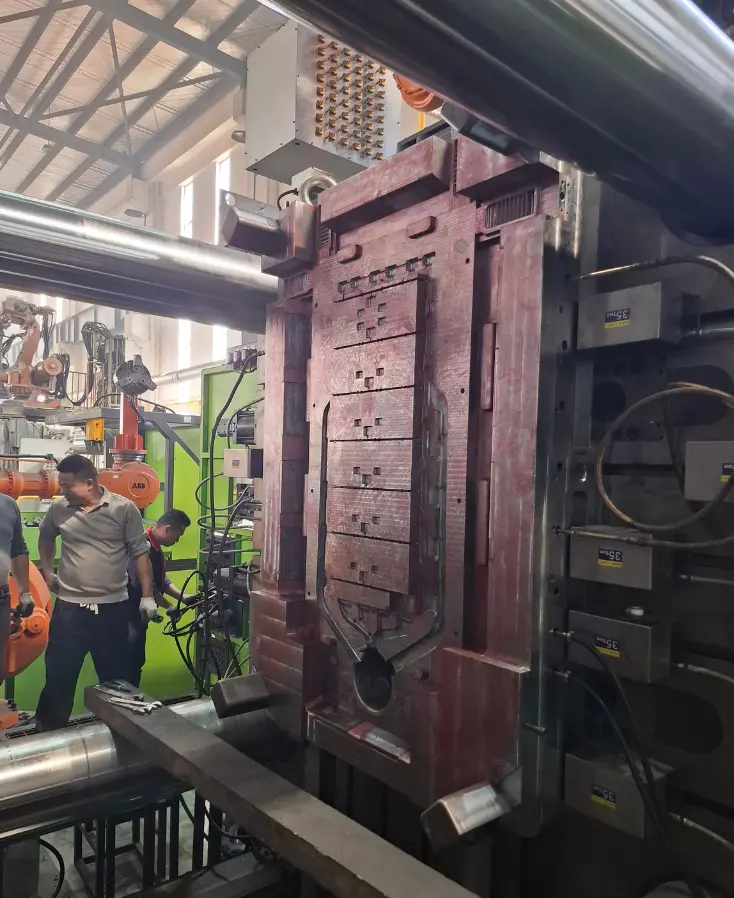
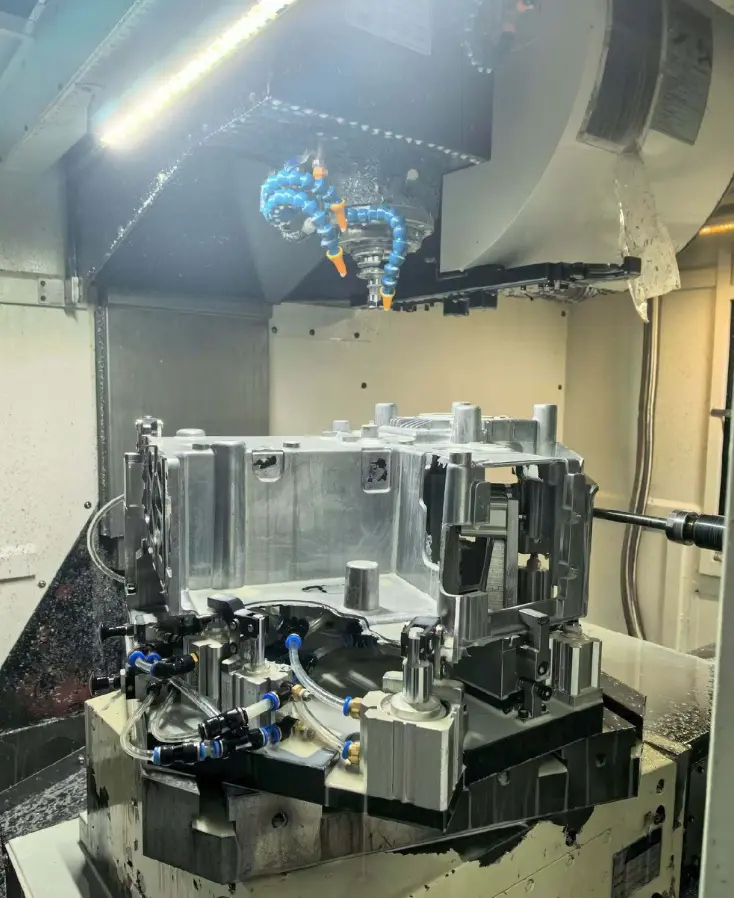
Precision Fabrication & Asset Care
Deploying our deep fleet profile featuring 400+ precision CNC units, we execute cavity blocks and intricate slide profiles down to sub-micron accuracy tolerances. A dedicated tool-and-die maintenance crew ensures active tooling passes rigorous cleaning protocols between manufacturing batches.
- High-Velocity CNC Milling specialized for Toughened Insert Cavities.
- Precision EDM Burners tailored for Micro-Ribs and Textured Surfaces.
- High-Gloss Mirror Buffing achieving Class-A Surface requirements.
- Comprehensive Preventive Lifetime Mold Asset Maintenance Matrix.
The Tooling Engineering Lifecycle
Step 01
DFM & Flow
Scientific simulations checking gates and chills prior to cutting steel.
Step 02
3D Engineering
Detailed architectural modeling focusing on thermal channels.
Step 03
Precision CNC
High-speed milling, EDM, and multi-axis matching down to ±0.01mm.
Step 04
Fitting Bench
Master craftsmanship assembly matching slides, cavities, and manifolds.
Step 05
T0 Test & QC
Initial machine dry runs coupled with complete dimension mapping.
Tooling Capabilities & Standards
| Parameter Designation | Specification Capability & Compliance Range |
|---|---|
| Mold Base Standards | Global Standards Compliance: LKM, DME, HASCO, or Fully Custom Design |
| Insert Cavity Materials | Assab 8407, Uddeholm Dievar, H13 Premium (1.2344), Premium SKD61 |
| Lead Time (T1 Samples) | Accelerated 25 to 45 Days (Dependent on architectural structural geometry) |
| Simulation Engine Support | AnyCasting Elite, Autodesk MoldFlow, PTC Pro-E, Siemens UG (NX) |
| Guaranteed Tool Life | Robust Performance Scaling from 50,000 to over 150,000+ Operational Shots |
| Thermal Heat Treatment | Fully Monitored Vacuum Quenching accompanied by Multiple Tempering Cycles |
Transform Your Concept Into Flawless Mass Production
Drop your 3D architectural data formats (STEP, IGS, or X_T) directly into our engine for a completely transparent, zero-cost engineering DFM feasibility assessment and itemized mold breakdown calculation. Our technical consulting desk is online to balance your lightweight project targets.
🚀 Rapid Engineering Response: Detailed DFM feedback & line-item mold pricing within 24 hours.
🛡️ Porosity Management: Multi-axis simulation mapping guarantees structural tool density.
Frequently Asked Questions
What is the minimum wall thickness you can achieve with your tooling?
For aluminum die casting, we routinely achieve thin-walled profiles down to 1.0mm to 1.2mm. For specialized magnesium projects, our custom tools can push boundaries safely down to 0.8mm, pending overall macro envelope sizes and bounding constraints.
How do you prevent warping in complex thin-wall components?
Warping kinetics are kept in check via dual engineering mechanisms: 1) Advanced mold thermal management utilizing micro-cooling channels to ensure uniform cooling, and 2) Custom-calibrated ejection plates paired with strategically mapped pins to prevent part twist or bend deflection during demolding.
Do you provide MoldFlow Analysis with every tooling project?
Yes. For thin-walled boundaries, full MoldFlow Analysis is mandatory across our process pipeline. This allows our squad to map front injection velocity vectors and preemptively neutralize cold-shuts or air entrapments before tooling layout blocks are processed.
Ready to start your project?
Talk to AlumCasting engineers about your casting, machining and tooling requirements.