
Expert Medical Device Component Machining Services
A 20-year veteran's perspective on medical device component machining. From aluminum housing to titanium implants, discover the critical role of precision in healthcare manufacturing.
Request a QuoteEngineering Perspective by AlumCasting’s Lead Tooling Specialist (20+ Years in Industry)
In most industries, a tolerance deviation of 0.05mm is a minor setback. In medical device component machining, it is a catastrophic failure. Over my two decades managing production lines in South China, I’ve learned that the medical sector doesn’t buy “parts”—they buy “certainty.”
Whether it’s a structural component for an MRI scanner or a handheld surgical tool, the convergence of casting applications and precision CNC machining is what makes modern healthcare possible. At AlumCasting, we don’t just see metal; we see the patient at the other end of the supply chain. For aluminum and magnesium precision die casting of medical components, see our precision die casting for medical equipment capabilities.
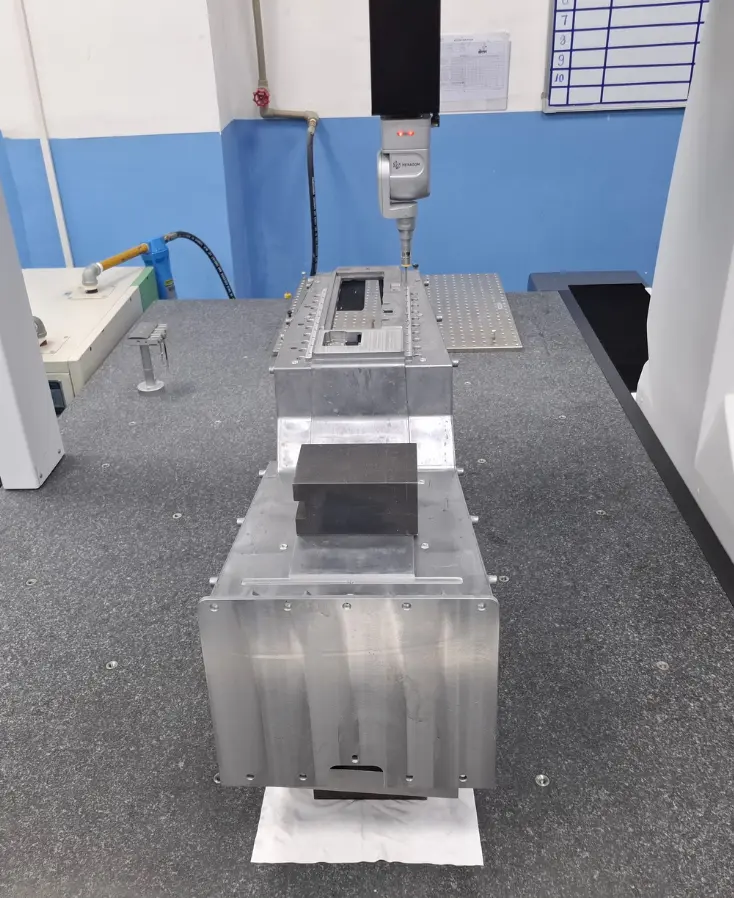 High-precision magnesium die-cast components: Bridging the gap between extreme lightweighting and structural rigidity in healthcare.
The Material Evolution: Beyond Aluminum
While aluminum remains a staple, we are seeing a massive shift toward aluminum to magnesium conversion in the medical field. Why? Because the next generation of portable surgical robots and diagnostic tablets demand a strength-to-weight ratio that only magnesium can provide.
As shown in the image above, the complexity we can achieve today allows for intricate, thin-walled structures that still offer robust corrosion protection through MAO coating. This is critical for parts that must withstand harsh hospital sterilization cycles.
“I once oversaw a project for a robotic surgical arm. The housing required such extreme flatness that even the heat from the operator’s hand during inspection could warp the results. We had to rethink our entire clamping strategy and temperature-control our workshop to 22°C. That is the level of obsession required.”
Precision at Scale: From T0 to the Operating Room
For structural medical components that require absolute density, we often recommend semi-solid casting followed by T6 heat treatment. This ensures that when the part hits our 5-axis CNC machines, the grain structure is stable enough to hold the tolerances your engineers demand.
Scaling these projects requires a partner who understands the journey from T0 trials to 10,000 units. In medical machining, you can’t just ‘speed up’ the line; you must maintain the same Cpk from the first part to the last. Q: Can you handle low-volume medical device prototyping?
A: Yes. We use bridge tooling to help medical startups reach functional testing phases without the long lead times of high-volume production dies. Q: How do you guarantee the internal integrity of these parts?
A: We utilize X-ray porosity control. For medical components, discovering a void during the final machining stage is a cost we don’t pass on to our clients—we prevent it at the source.
Need a manufacturing partner who understands that in medical, “close enough” is never enough? Connect with our specialized medical team in Dongguan today.
Ready to start your project?
Talk to AlumCasting engineers about your casting, machining and tooling requirements.