
ISO 14001 High Pressure Aluminium Die Casting
Global procurement managers in high-stakes sectors face a multifaceted technical challenge when qualifying a new manufacturing partner. This is especially tr...
Request a QuoteGlobal procurement managers in high-stakes sectors face a multifaceted technical challenge when qualifying a new manufacturing partner. This is especially true for companies in New Energy Vehicles (EV), medical instrumentation, and aerospace. Specifically, unit piece price is a deceptive metric if the supplier fails on key performance vectors. Consequently, you must evaluate long-term operational continuity, tight dimensional tolerances, and predictable microstructural integrity.
Therefore, in international supply chain verification, partnering with a premier high pressure aluminium die casting manufacturer iso 14001 certified is critical. This specific certification acts as the ultimate filter separating average foundries from world-class partners. Furthermore, this engineering guide explores how environmental management frameworks and deep metallurgical expertise intersect. As a result, you can systematically eliminate manufacturing defects, mitigate strategic risks, and secure long-term project success.
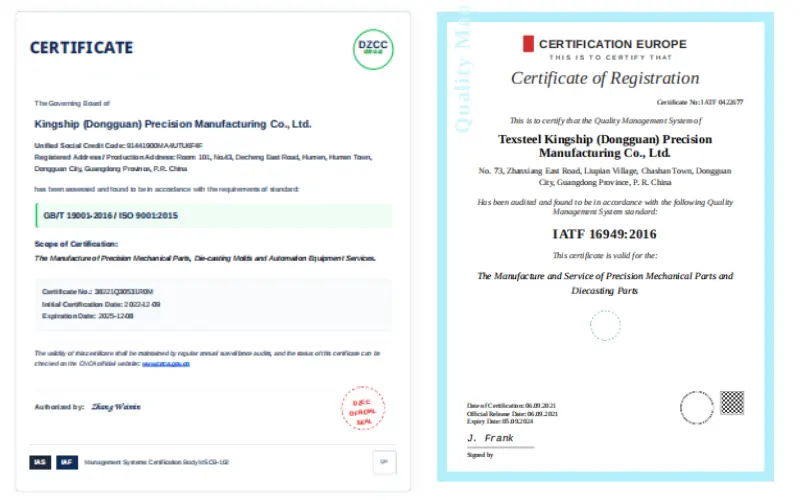 Figure 1: Adherence to international IATF 16949 and ISO 14001 frameworks provides the standardized operational control required to pass stringent overseas supplier audits.
1. The Environmental Framework: Why ISO 14001 Stabilizes Core Manufacturing Processes
However, to procurement professionals unfamiliar with foundry dynamics, an ISO 14001 certification may appear optional. Some view it simply as a corporate social responsibility checkbox. Conversely, within heavy industrial environments, a true iso 14001 certified casting factory leverages this framework deeply. They use it as a rigorous protocol for strict process control.
For example, High-Pressure Die Casting (HPDC) requires tremendous thermal energy. The foundry must convert massive payloads of raw ingots, such as ADC12, A356, and A380, into molten liquid. This melt occurs at temperatures exceeding 660°C. Without systematic environmental control, subtle fluctuations will occur in melting efficiency and raw scrap management. Consequently, dross formation will directly corrupt the chemical consistency of the melt.
During an on-site supplier audit, compliance with ISO 14001 guarantees a distinct operational advantage. Specifically, it proves that the factory strictly monitors the lifecycles of its raw materials and consumables. For instance, poor dross segregation and unregulated recycling of internal runner scrap introduce severe risks. These bad practices insert high concentrations of non-metallic inclusions, such as α-Al2O3, and oxide films into the holding furnace. Subsequently, these microscopic impurities dramatically alter the fluid dynamics of the molten aluminum. This disruption occurs during the high-velocity cavity-filling stage.
Therefore, by enforcing closed-loop material traceability, an accredited factory stabilizes chemical composition variations. These variations stay within an ultra-narrow window of ±0.05%. As a result, the process preserves the critical mechanical properties specified in your CAD engineering blueprints.
2. Tooling Design Mastery: Advanced Engineering Expertise in DFM and Thermal Dynamics
While environmental compliance establishes operational stability, advanced tooling engineering determines the physical viability of a cast part. In fact, the lifecycle of an HPDC project is fundamentally decided before cutting the first block of tool steel. Therefore, you should collaborate with a manufacturer capable of executing a data-driven cost-down DFM design for aluminum die casting molds.
This preventative measure eliminates catastrophic field failures. In addition, it cuts down unplanned tooling re-works during mass production. Specifically, advanced mold design requires the precise placement of injection gates and multi-zone cooling circuits. Furthermore, engineers must integrate conformal oil lines to control the solidification profile of the alloy.
During injection, the molten alloy enters the die at velocities ranging from 40 m/s to 60 m/s. This step happens under intensification pressures exceeding 80 MPa. Consequently, inadequate thermal balance within the H13 or Dievar tool core leads to severe structural defects. For example, hot spots cause concentrated shrinkage cavities. Conversely, localized cold zones induce premature solidification, causing cold shuts, misruns, or surface cosmetic blemishes.
To prevent this, an expert engineering team simulates these extreme thermal behaviors using premium magma-flow and finite element analysis (FEA) software. They then optimize gating areas and air venting channels based on data. As a result, they guarantee uniform solidification and maximum part density.
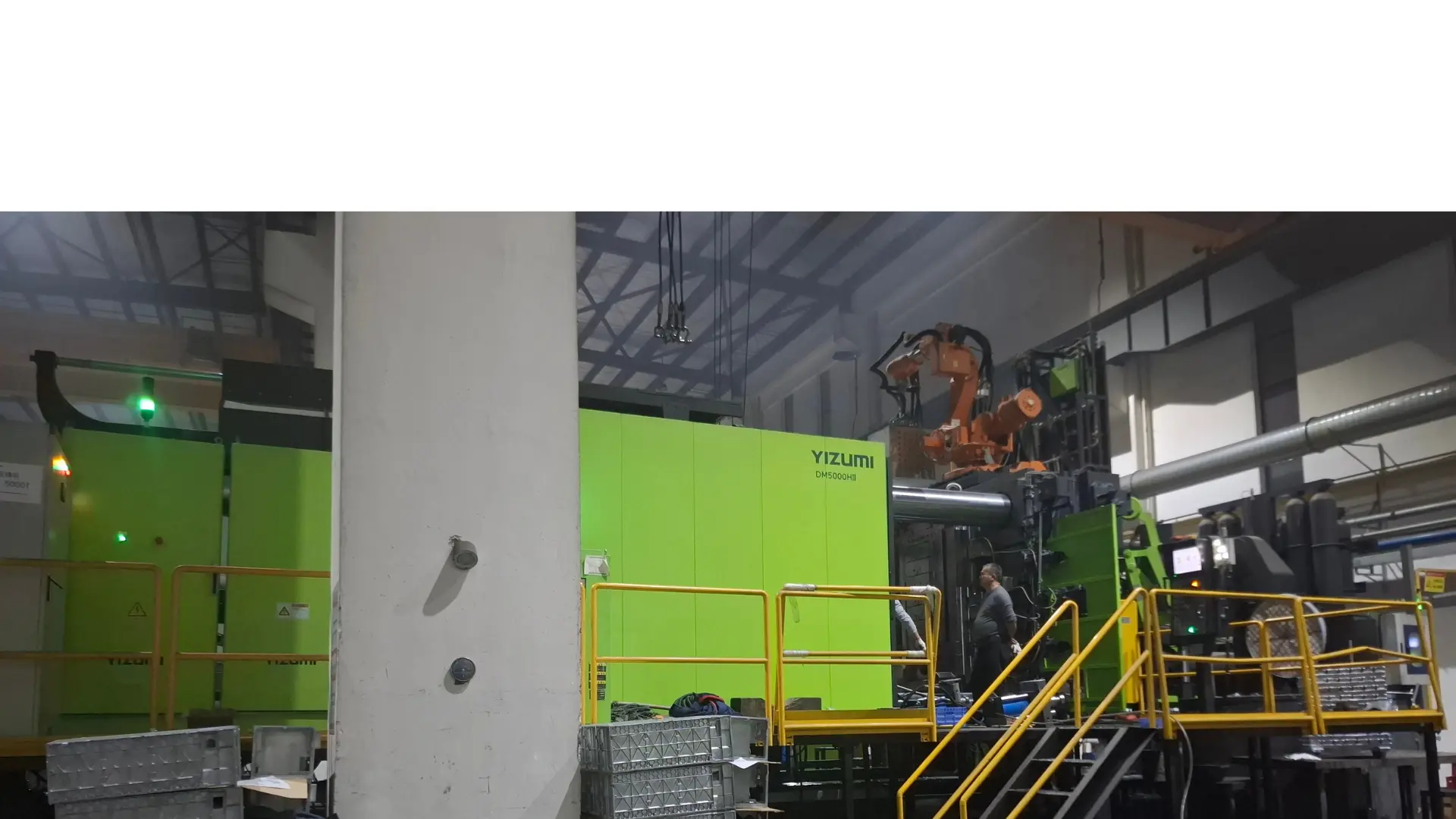 Figure 2: Large-scale 5000T HPDC machines equipped with real-time shot-trace feedback loops are required to produce dimensionally stable, thin-walled automotive structural components.
| Process Parameter | Standard Unregulated Foundry | Audited Process Control (ISO 14001 / IATF) | Impact on Component Integrity |
|---|---|---|---|
| Melt Temp Stability | ±15°C to ±20°C | ± 5°C (Continuous Induction Monitoring) | Eliminates premature solidification & micro-porosity |
| Intensification Pressure | Unmonitored / Hydraulic Fluctuations | > 85 MPa (Real-time Closed-Loop Feedback) | Compacts residual micro-voids, increasing structural density |
| Lubricant Dilution Ratio | Manual Proportional Spraying | Automated Multi-Axis Mixing | Eliminates volatile gas generation, preventing T6 blistering |
| Internal Gas Entrapment | Up to 3.5% allowable volume | < 0.5% Volume (High-Vacuum Spec) | Guarantees hermetic air-tightness and maximum yield |
3. Mitigating Critical Defects: Porosity Control and Vacuum-Assisted Technologies
Undeniably, the primary technical barrier in high-pressure aluminum manufacturing is gas entrapment and shrinkage porosity. This entrapped air can severely compromise structural integrity. Consequently, it renders components completely unfit for downstream post-casting heat treatments or heavy precision CNC machining.
To solve this, a premium manufacturer controls the high pressure die casting process quality directly. Specifically, they integrate automated real-time shot-trace monitoring with high-efficiency vacuum assist systems. For instance, they draw a continuous vacuum below 50 mbar inside the tool cavity. This occurs before the active injection phase begins. Therefore, the alloy fills ultra-thin walls without encapsulating ambient hydrogen gases.
Furthermore, the manufacturing facility must deploy industrial non-destructive inspection systems to verify internal density. This step is vital for structural components like electric vehicle battery boxes or intricate medical housings. Clearly, superficial visual checks are entirely insufficient for modern engineering standards.
During an on-site audit, engineers must verify that the supplier actively utilizes high-resolution digital imaging. This testing detects sub-surface air pockets before parts move to final machining lines.
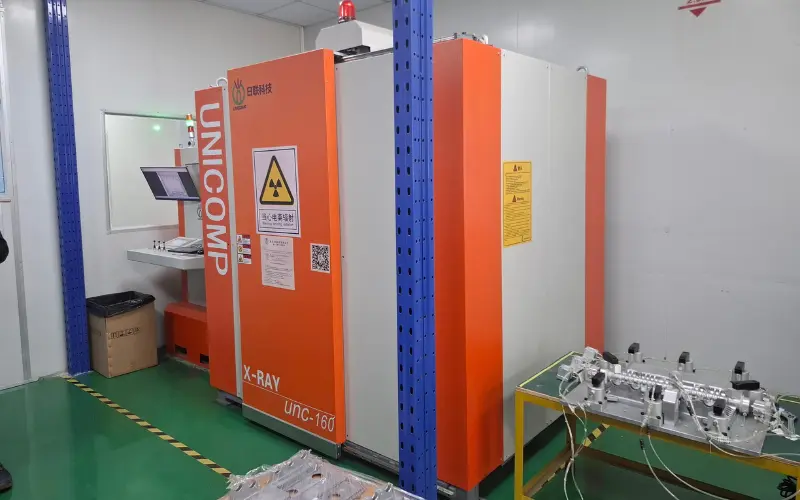 Figure 3: Real-time non-destructive X-ray inspection is deployed directly on the production line to detect internal gas porosity and shrinkage cavities, ensuring zero-defect delivery.
Technical Checklist: Vetting an HPDC Supplier’s Quality Infrastructure
- Advanced Porosity Defense: Real-time shot-trace tracking with automated pneumatic sorting for shot profiles that deviate from the calibrated pressure curve.
- Metrology and Dimensional Control: Multi-axis Coordinate Measuring Machines (CMM) to ensure tight tolerances down to ±0.015 mm on critical post-machined features.
- Alloy Validation: Optical Emission Spectrometers (OES) analyzing every ladle charge to prevent tramp element contamination from out-of-spec ingots.
- Defect Remediation: Proven track record utilizing comprehensive data sets from a dedicated die casting defects and solutions guide to optimize parameter settings systematically.
4. Downstream Consistency: From Foundry Floor to 5-Axis Precision CNC Machining
In conclusion, the true alignment of an ISO 14001 framework and engineering mastery becomes apparent during downstream finishing operations. On one hand, environmental management ensures consistent raw material inputs, predictable cooling water cycles, and stable machine performance. On the other hand, the precision machining engineering team applies tight tolerances to complete your product.
Therefore, you should select an integrated, single-source manufacturing partner. Choosing a partner that bridges the gap between foundry floor operations and an iatf 16949 high tolerance automotive cnc machining supplier network is critical. This strategy ensures that tight dimensional datums are preserved across tens of thousands of cycles. Consequently, you avoid cumulative tolerance stack-up errors.
Ultimately, a comprehensive supplier audit reveals the invisible engineering workflows that prevent mid-production bottlenecks. For instance, you should verify a partner’s digital data logs, automated shot-control curves, and environmental mitigation protocols. By doing so, you protect your product launch from unexpected market delays. In addition, you avoid costly tooling re-works and catastrophic structural component failures in the field.
Optimize Your Component Strategy with a Technical DFM Evaluation
Are you preparing for a critical supplier audit, or do you need to optimize an upcoming high-pressure die casting project for mass production? Work directly with our 20-year veteran engineering team. Send us your 3D IGS/STEP models and detailed CAD drawings today to receive a comprehensive, data-driven Design for Manufacturing (DFM) review, porosity analysis, and a transparent commercial quote within 24 hours.
Ready to start your project?
Talk to AlumCasting engineers about your casting, machining and tooling requirements.