
Automotive CNC Machining | High-Tolerance Services
IATF 16949 certified high-tolerance automotive CNC machining services up to ±0.01mm. Expert 5-axis milling for EV motor housings and powertrain components in Dongguan & Shenzhen.
Request a QuoteSecuring Critical GD&T Demands Up to ±0.01mm. We bridge the structural performance gap for next-generation powertrain blocks, lightweight EV chassis cells, and structural castings.
📍 Operational Sourcing: Dongguan & Shenzhen, China
👤 Technical Auditor: Hank (Senior Tooling Director & Precision Milling Specialist)
🛡️ Quality Framework: IATF 16949 Standards Standardized
Automotive Compliance
Operating in strict accordance with the IATF 16949 framework. Every production batch undergoes full PPAP layout approval and comprehensive material heat-treatment analysis.
Complex Kinematics
Advanced simultaneous 4-axis and 5-axis CNC machining capabilities to efficiently process complex structural engine paths and intricate prismatic angles in a single operational setup.
Strict Quality Metrics
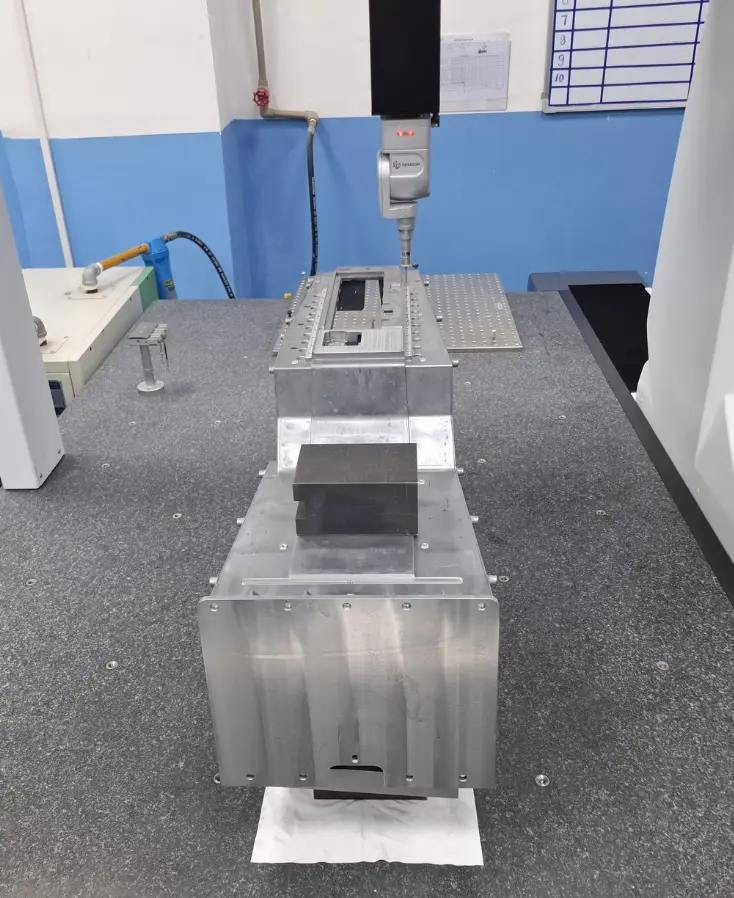
Our quality lab targets Cpk ≥ 1.67 for critical dimensions. Equipped with high-precision CMM, roundness testers, and air-gauging tools for seamless data verification.
400+
Advanced CNC Hubs
±0.01mm
True Positional Limit
5-Axis
Simultaneous Milling
≤Ra 0.8μm
Hermetic Micro Finish
Multi-Axis Kinematics & Rigid True Position Control
In modern automotive sub-assembly engineering, achieving nominal wall thickness limits while maintaining absolute concentricity across 500mm spacing demands more than typical milling routines. Our fleet utilizes advanced 4-axis and simultaneous 5-axis CNC processing configurations setup inside climate-controlled cells across our Dongguan facility.
By completing intricate geometric cutting paths—such as complex split-lines, deep bearing bores, and dense bolt patterns—in a single structural workholding setup, we completely eliminate the cumulative indexing stack-up errors that plague standard multi-operation manufacturing setups. This capability is critical when executing advanced post-machining operations on complex high pressure die casting components.
- Real-time in-machine thermal probing sensors compensating for tool expansion.
- Rigid custom clamping fixtures to eliminate thin-walled component harmonic chatter.
- Simultaneous multi-axis paths ensuring Class-A geometric surface integration.
- Automated localized tool-wear trackers executing micron-level offset indexing.
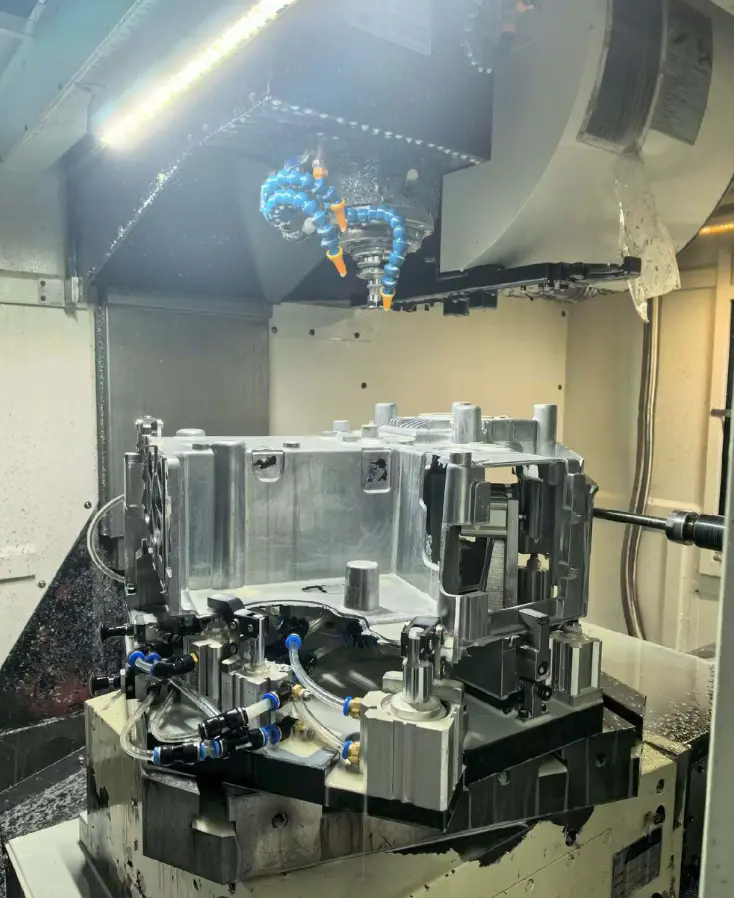 Hank’s Floor Log: Controlling Thermal Distortion in EV Housings
“When machining large-scale thin-walled aluminum components like integrated EV battery housing structures, the primary engineering enemy is residual thermal stress. A temporary temperature jump of just 5°C on the machine bed can pull a long bearing bore completely out of its ±0.015mm geometric true-position profile. We overcome this by utilizing continuous high-volume chilled flood coolants paired with specialized high-feed carbide cutters to move 90% of the friction heat directly into the escaping metal chips, protecting the metal’s internal grain boundaries.”
Metallurgical Material Mastery in Dynamic Sourcing
Securing stable high-tolerance automotive CNC machining outcomes requires a deep understanding of structural metallurgy. Different structural alloys behave distinctively under aggressive shearing forces. For example, high-fluidity cast structures can harbor hidden tensile stresses that risk distorting immediately once the outer metal layer is broken during roughing.
We analyze tool geometry, chip loads, and feed rates specifically adapted for premium raw materials. Whether finishing dense, heat-treatable structural parts like an A356 aluminum alloy configuration or executing ultra-lightweight cutting paths on complex magnesium housings, our processing parameters ensure that target clearances remain stable through severe operational temperature cycles.
- Aluminum Formats: A356, ADC12, AlSi7Mg, and forged 6061-T6 matrices.
- Magnesium Structures: High-purity AZ91D and AM60B to optimize weight reductions.
- Fuel Cell Infrastructure: High-grade austenitic 304 and 316L stainless alloys.
📐 Precision Engineering Note: Micro Surface Feed Rate Control
To guarantee fluid-tight hermetic seals on mating faces without relying on heavy sealing gaskets, our engineers optimize the exact table feed per minute during finishing paths:
$$V_f = n \times z \times f_z$$
Where: Vf = Table feed rate (mm/min); n = Spindle speed (RPM); z = Number of effective cutting flutes; fz = Specified feed per tooth (mm/tooth). For sensitive thin-wall die casting tooling components, we precisely balance tool pressure against peak surface micro-roughness to achieve Ra ≤ 0.8μm.
Technical Tolerances & Production Operational Metrics
Quantifiable performance metrics verified through our independent, internal quality departments.
| Machining Operation | Maximum CNC Working Envelope | Achievable True Tolerances | Primary Automotive Application Case |
|---|---|---|---|
| 5-Axis Simultaneous Milling | Up to 1400mm × 1200mm × 600mm | ±0.010 mm | Inverter Enclosures, Complex EV Motor Housings |
| High-Speed CNC Turning | Max Diameter: 450mm | ±0.008 mm | Powertrain Input Shafts, Precision Splines |
| Geometric Flatness & Parallelism | Per 100mm ² Surface Section | ≤ 0.015 mm | Liquid-Cooling Manifolds, Mating Flanges |
| Sub-Surface Defect Inspection | Full Volumetric Scan | Non-Destructive Radiography | Validated via porosity control X-ray inspection |
| Scalable Fleet Throughput | 400+ Active Operational Centers | 5 Million+ Parts / Year | Seamless transition from bridge tooling to mass production |
Initiate a High-Tolerance Manufacturing Feasibility Evaluation
Struggling with tight geometric true positions, complex multi-axis milling paths, or casting distortion? Upload your unrefined 3D solid models (STEP/IGS formats) today. Our engineering hub in Guangdong provides comprehensive technical DFM reviews and detailed tooling cost models within 24 hours.
Frequently Asked Questions
What is your typical lead time for automotive T0 samples?
For high-tolerance shafts, housings, and valves, we typically deliver T0 fully-machined functional samples within 7-10 working days, depending entirely on stock raw material availability and the complexity of the custom holding fixtures.
How do you ensure concentricity in long automotive shafts?
We utilize high-precision live-tooling CNC lathes paired with synchronized specialized hydraulic steady rests to eliminate mid-shaft deflection during rotation. By machining critical outer diameters in a single uninterrupted operation, we eliminate dynamic run-out stack up.
Can you handle high-volume orders for automotive structural components?
Yes. Operating over 400 precision CNC machining centers across our scalable manufacturing floor spaces, we provide the throughput required to comfortably scale up production while locking down strict statistical Cpk data compliance matching typical Tier-1 automotive sourcing audits.
Ready to start your project?
Talk to AlumCasting engineers about your casting, machining and tooling requirements.