
Die-Cast Aluminum Electric Motor Housing Suppliers
Skip trading brokers. A 20-year tooling veteran breaks down the micro-mechanics of selecting die cast aluminum electric motor housing suppliers. See our vacuum air-tightness controls, stator bore shrinkage management, and real floor validation data.
Request a QuoteBeyond General Castings: Sourcing Electric Motor Housings from an Advanced Tooling Desk
High-speed EV stators demand flawless thermal dissipation and zero hermetic leakage. Let’s talk about thin-wall filling dynamics, volumetric bore shrinkage, and active porosity defense loops. Request an EV Engineering DFM Review
Why Standard Die Casting Factories Fail at Electric Powertrain Requirements
If you run a procurement or engineering group sourcing components for electric vehicle programs, industrial servo loops, or high-output e-mobility platforms, you already know the market is flooded with trading agents. They all use the exact same catalog pictures and copy-pasted taglines listing themselves among generic die cast aluminum electric motor housing suppliers. But when you upload a 3D STEP file featuring integrated cooling pathways and ultra-thin weight-saving outer fins, their engineering feedback falls completely silent.
I have managed tooling lines on Guangdong foundry floors for over twenty years. Let’s look at the actual physics: an electric motor enclosure isn’t a simple decorative bracket. It serves as a structural safety boundary, an electromagnetic shield, and a thermal heat sink all at once. The stator bore must remain perfectly round within microns after press-fitting, and the cooling jacket cannot exhibit a single pinhole leak under 5 bar of constant fluid pressure. Sourcing from a general vendor that handles simple garden fittings means risking massive structural failure when your motor goes into high-speed operation.
A Note on Thermal Dynamic Balancing:
When liquid aluminum hits mold steel during an injection run, it cools rapidly. For intricate electric motor frames, if your supplier uses standard cold-chamber configurations without active thermal monitoring or relies on manual ladling, you will get premature freezing defects, knit lines, and cold shuts around the internal stator tracks. Overcoming these challenges demands advanced tool engineering, a stable cold chamber die casting services cell framework, and precise control of machine injection speeds down to the millisecond.
Securing high-integrity powertrain components requires working with an engineering partner that monitors quality from the initial furnace charge. By running your components through specialized EV powertrain casting manufacturer workflows, we stabilize the entire high pressure die casting process quality matrix to eliminate manufacturing defects long before cutting tool steel.
The Manufacturing Defense Layer: Production Infrastructure
We do not manage production runs using guesswork. Our plant operates heavy-duty casting machinery paired with strict inspection tools to ensure every enclosure meets drawing limits.
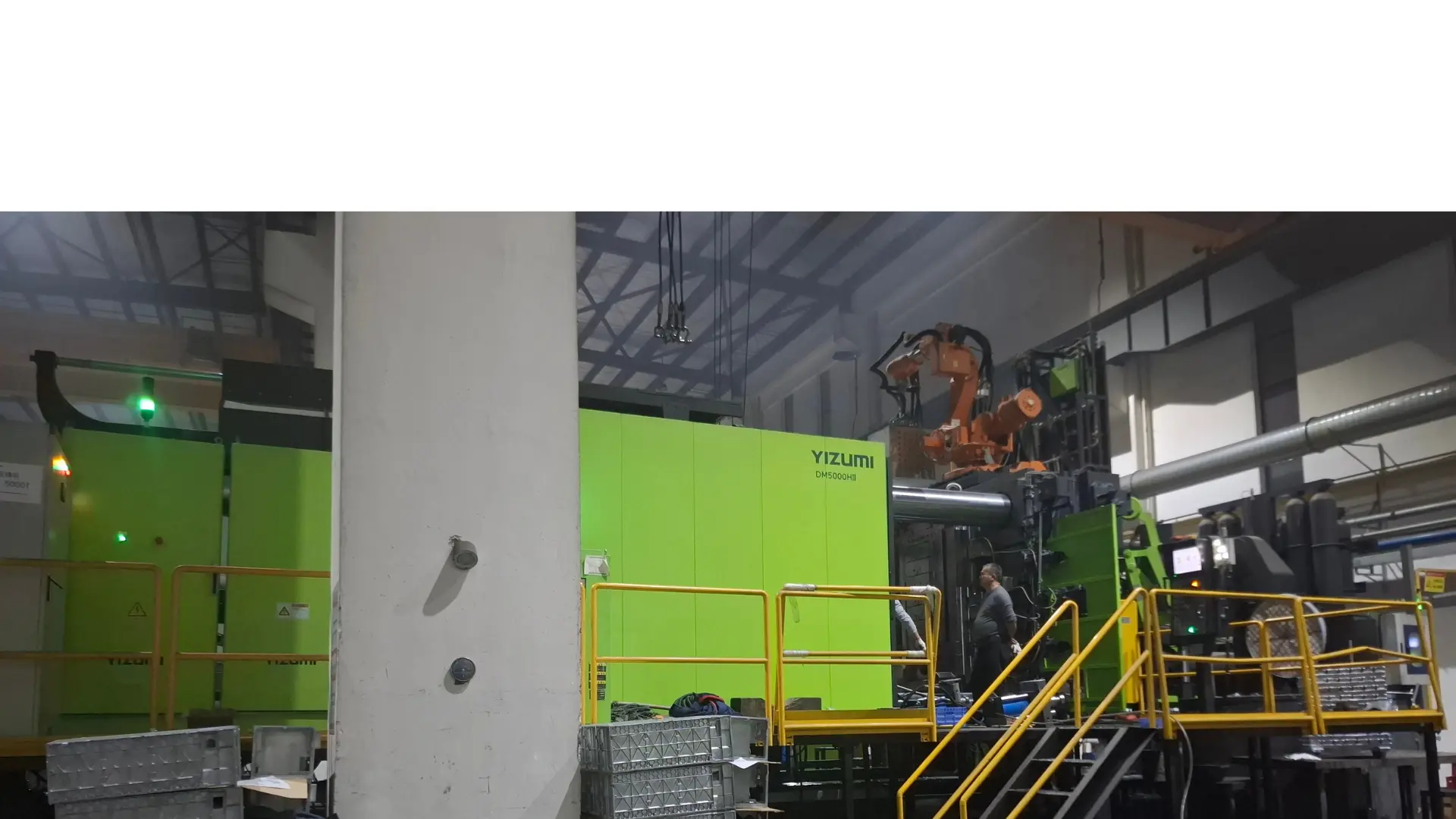
High-Pressure Production Cells
We operate dedicated, large-scale injection infrastructure, including our automated large scale 5000t aluminum die casting factory China line, to handle the massive projected surface areas and complex large-scale aluminum die casting expertise footprints required by multi-kilowatt EV motor shells.
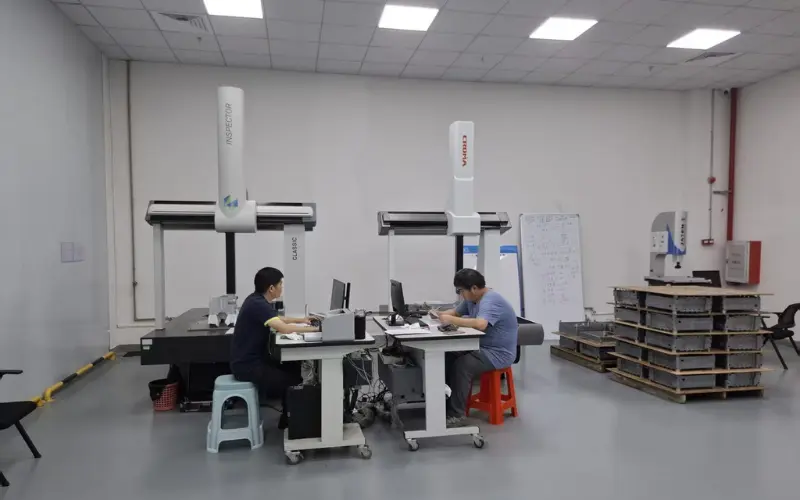
Zeiss CMM Geometric Controls
Using our temperature-stable Zeiss CMM metrology systems, we measure stator bore concentricity and axis parallelism down to ±0.001 mm, satisfying strict high tolerance automotive CNC machining standards on every part batch.
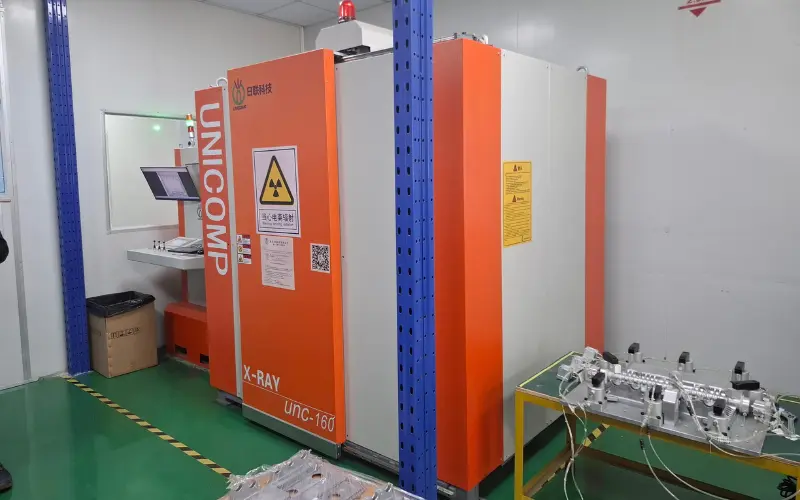
Sub-Surface Radiographic Grading
Every critical batch of motor frames undergoes inspection through our real-time porosity control x-ray inspection castings station to check subsurface density before the parts proceed to our high-speed machining loops.
Material Matrix: Optimizing Core Alloys for Thermal and Mechanical Stability
Choosing the correct raw aluminum grade is vital for managing heat dissipation and structural strength. Our engineering team helps you balance fluid castability against your field load demands to find the right path between a standard 380 aluminum die casting service or high-conductivity structures:
| Aluminum Grade Spec | Thermal Conductivity Performance | Primary Engineering Advantage for Enclosures |
|---|---|---|
| Alloy ADC12 (Si-Cu-Fe Group) | ~96 W/m·K | Excellent fluidity for thin-walled cooling fins; ideal for cost-optimized adc12 die casting cnc machining configurations. For reference data, review our complete aluminum alloy adc12 properties engineering guide. |
| Alloy A380 (Standard Automotive Group) | ~100 W/m·K | Provides an excellent balance of structural rigidity and thermal performance across diverse automotive die casting parts programs. Full details are available in our a380 aluminum die casting alloy properties matrix. |
| Alloy A356 (High-Purity Structure Group) | ~150 W/m·K | Superior thermal behavior and elongation; compatible with T6 structural hardening via advanced a356 aluminum die casting porosity control methods. |
By evaluating these parameters during early design stages, we can suggest geometry modifications that lower part weight. Our upfront how DFM analysis reduces die casting costs review process identifies tool wear risks early to optimize mold performance, leveraging our specialized cost down DFM design aluminum die casting molds expertise.
Q1: How do you achieve true air-tightness in motor housings with integrated cooling channels?
A: Entrapped gas is the enemy of pressure-tight parts. We resolve this by running specialized vacuum assisted die casting vs conventional hpdc air tightness protocols. By drawing a deep vacuum inside the mold cavity below 50 mbar before injection, we prevent turbulent air mixing. This step ensures clean metal structures that consistently pass 100% differential pressure leak tests.
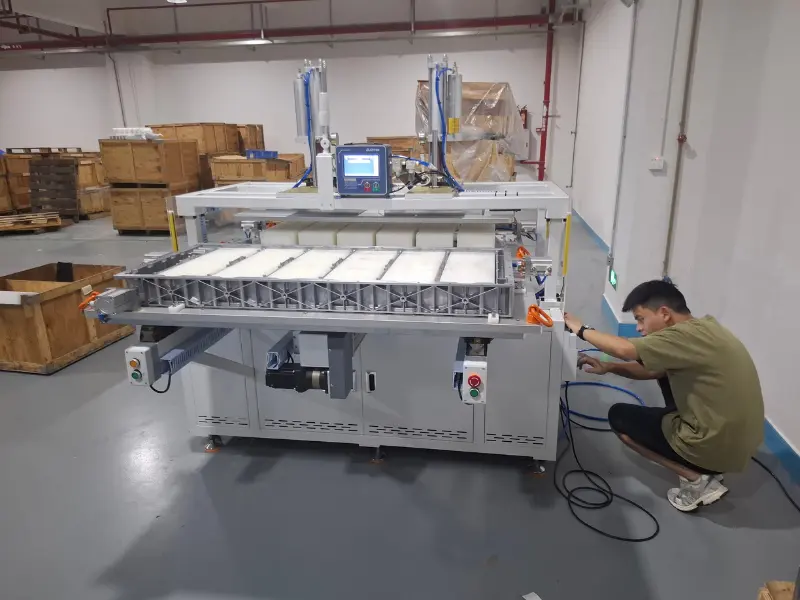
Q2: Why must high-voltage motor housings pass strict ASTM E155 standard X-ray porosity grading?
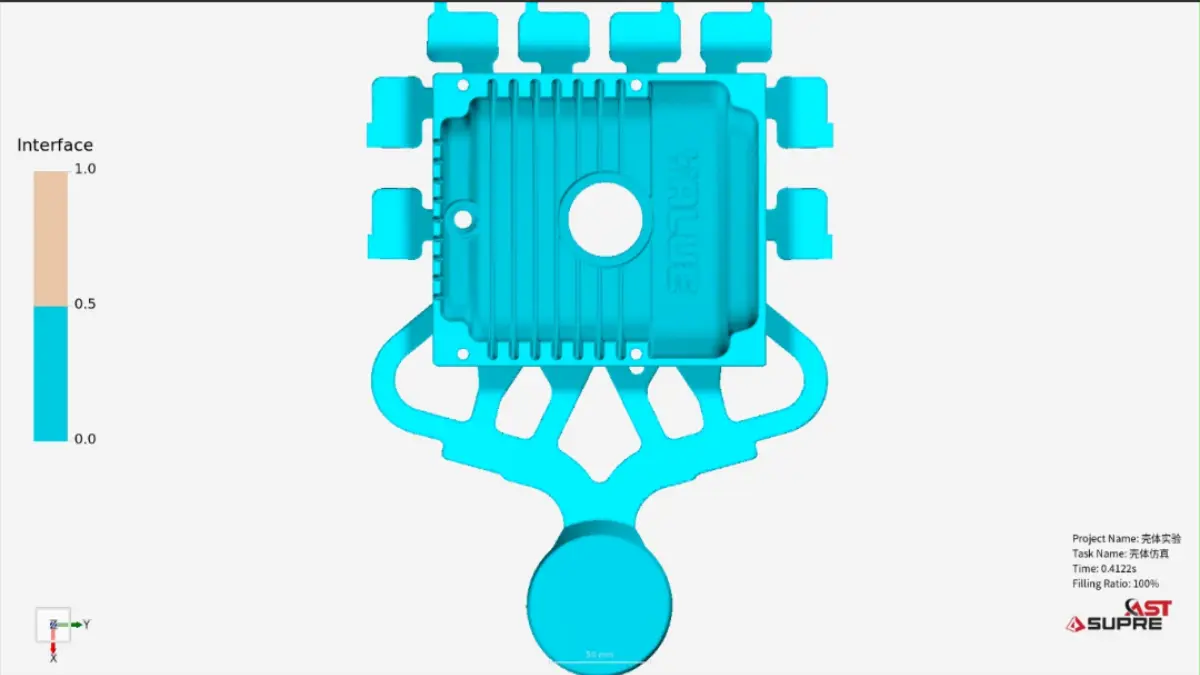
A: Subsurface voids act as stress risers. Under the continuous vibration of an electric vehicle drivetrain, hidden micro-pores can turn into fatigue cracks. We inspect critical structural locations to the ASTM E155 standard X-ray porosity grading matrix, rejecting any components that exceed Class 2 specifications to guarantee long-term field reliability. Learn more about our specialized systems by reading about our 5 methods to eliminate porosity in aluminum pressure die casting.
Q3: What methods do you use to protect raw aluminum motor enclosures from galvanic environmental corrosion?
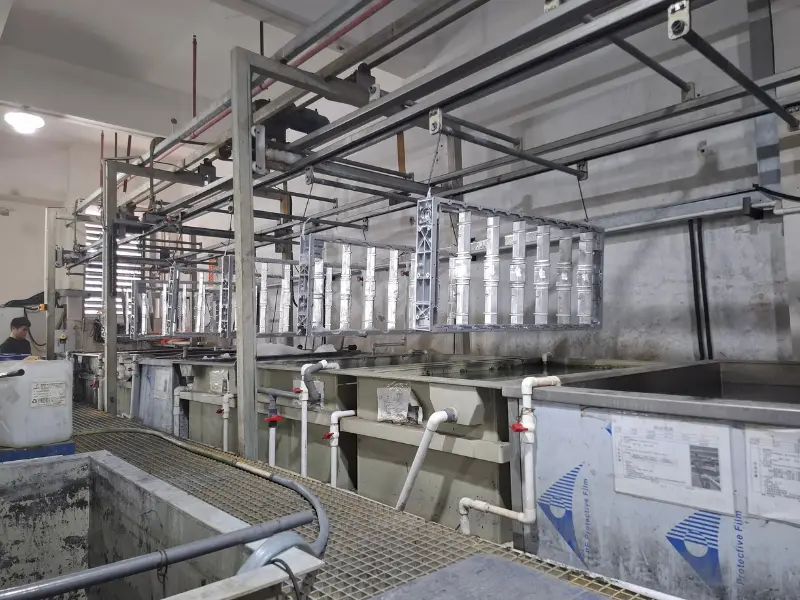
A: Electric powertrains are frequently exposed to harsh environment cycles, creating a risk for micro-galvanic oxidation where the housing connects with different steel fasteners. We protect these critical assembly points by managing parts through a continuous wash and surface line using specialized surface finishing aluminum magnesium casting chemical controls. This process provides an even conversion coat that seals the metal surface.
Q4: Can semi-solid processing be utilized for high-output electric motor stator frames?
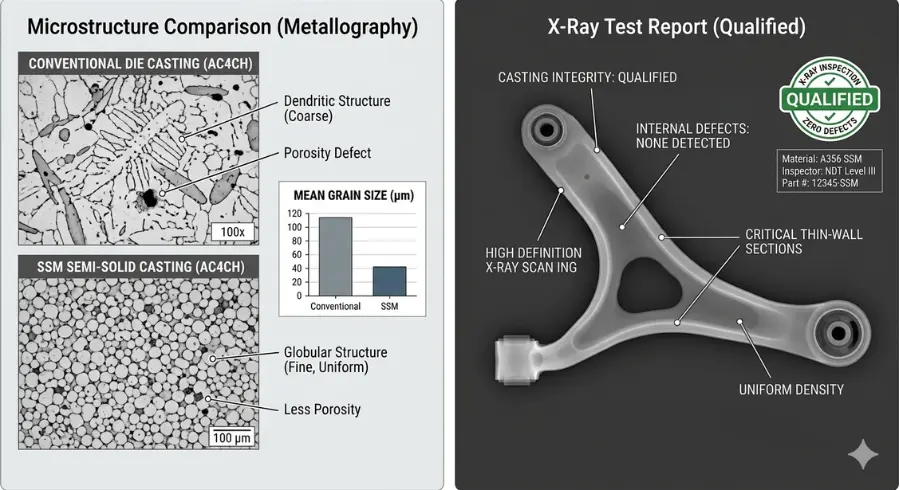
A: Absolutely. While high-pressure casting is ideal for thin-walled parts, our semi solid die casting manufacturers workflow offers a distinct alternative for heavy structural variants. By injecting aluminum in a thick, semi-solid state, we avoid air entrapment entirely, delivering dense parts capable of full T6 structural heat treatments. For an expert breakdown of the processes, check out our guide on a356 semi-solid casting benefits.
Tired of Procurement Delays and Porosity Rejections?
Submit your engineering documentation directly to an experienced shop floor team. Whether you are dealing with challenging stator dimensions or developing an integrated liquid cooled aluminum cooling plates for electric vehicles assembly, we will provide a comprehensive DFM study and formal quotation within 48 business hours. We are fully equipped as an IATF 16949 high tolerance automotive CNC machining supplier to back your global tracking needs.
All engineering data, 3D STEP models, and commercial requirements are secured under mutual Non-Disclosure Agreements (NDA). Reach our team directly via our contact page.
Submit Technical Powertrain RFQ
Need to build lightweight, high-strength assemblies? Review our comprehensive one-stop die casting manufacturing capabilities.
Ready to start your project?
Talk to AlumCasting engineers about your casting, machining and tooling requirements.