
ADC12 Die Casting & CNC Machining Services
Specialized in ADC12 die casting with high-precision CNC machining for Tier-1 automotive and global OEMs. 100% porosity control, Zeiss CMM validation, and IATF 16949 compliant. Upload your 3D CAD files for a free engineering DFM review.
Request a QuoteBridging the Gap Between Heavy Molten Metallurgy and Sub-Millimeter Dimension Engineering. Built for Global OEMs and Tough Industrial Standards. Request Technical DFM & Quote
The Unspoken Battle: Managing Sub-Surface Porosity When Cut Meets Cast
Let’s be blunt. Anyone can buy standard Japanese ADC12 ingots and dump them into an overseas injection cell. The real nightmare begins the exact second your multi-axis CNC cutting head bites into the cold raw aluminum. If your Chinese aluminum casting supplier treats melting and machining as two isolated departments, you are doomed to discover microscopic subsurface air bubbles exposed exactly where your critical sealing grooves or precision hole systems are located.
I have overseen thousands of high-pressure runs over the last two decades. I know how heartbreaking it is to watch a beautifully cast component fail a pressure leak validation test because of deep internal pockets. That is why we refuse to treat one-stop die casting and CNC machining as separate hand-offs. We engineer the tool paths, the solidification boundaries, and the cutting pressures within one single unified system.
“ADC12 offers exceptional fluid flow properties for complex thin walls, but without vacuum-assisted venting and rigid fixture dampening, high-speed CNC milling will warp the part or rip through micro-voids.”
Engineering Breakdown: CNC Machining Constraints of ADC12 vs. High-Thermal ADC-HC3
When transitioning from standard structural applications to advanced telecommunications or automotive electronics, selecting the right alloy radically alters machine shop dynamics. While standard ADC12 is crisp to cut due to its high silicon content (9.6%-12.0%), specialized hyper-conductive alloys like ADC-HC3 present completely different mechanical resistance layers during high-speed multi-axis post-processing:
- Tool Wear & Cutting Speeds (Vc): The abundant silicon crystal flakes in standard ADC12 act as micro-abrasives, requiring diamond-coated (PCD) inserts to sustain an optimal cutting velocity of Vc = 800-1200 m/min. Conversely, low-silicon, hyper-pure alloys like ADC-HC3 exhibit higher raw ductility, reducing abrasive wear but triggering severe edge buildup (sticky burrs) if cutting speeds drop below 1000 m/min.
- Feed Rate (fz) & Surface Finish (Ra): For O-ring groove isolation paths on ADC12 enclosures, we maintain a strict feed rate of 0.08–0.15 mm/tooth to prevent brittle micro-chipping along structural walls. For ADC-HC3, we accelerate the feed up to 0.12–0.22 mm/tooth alongside aggressive multi-flute geometries to deliberately snap the ductile chips before they wrap around the primary spindle assembly.
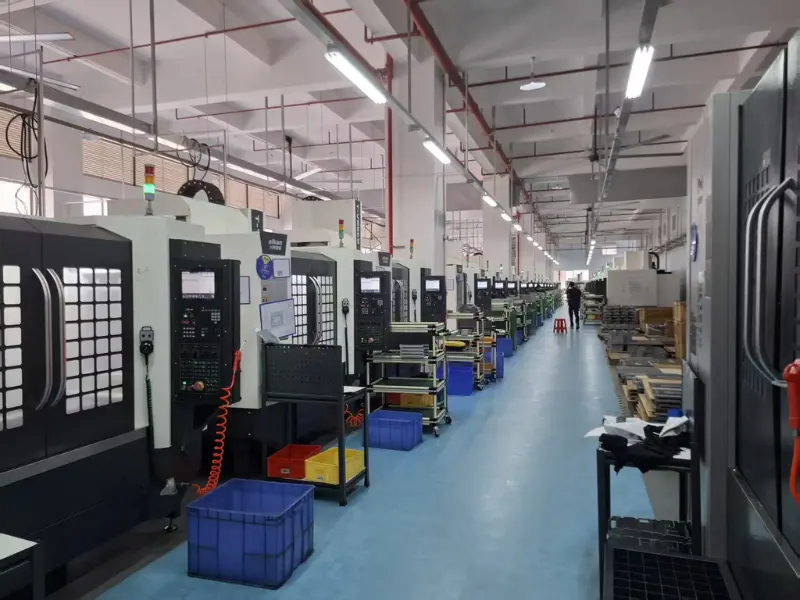
- Clamping Pressure & Heat Management: Standard ADC12 resists deflection but is prone to breaking through subsurface micro-voids if targeted cut depths are too deep. Hyper-pure thermal alloys lack this brittle threshold but possess a much higher thermal expansion coefficient. We solve this on our CNC floor by deploying custom hydraulic dampening fixtures paired with high-volume, 70-bar through-spindle flood cooling to eliminate structural warping during thin-wall facing runs.
Whether you are designing advanced electronics enclosures, complex oil system paths, or rugged automotive die casting parts, our plant tackles systemic problems before cutting tool steel. By running aggressive upfront cost-down DFM mold analysis, we strategically plan out where material overflows sit, controlling the raw skin density so the CNC machining head never breaks through the structural sound layer.
The Engineering Blueprint: Complete Quality & Tolerance Matrix
We do not use empty commercial phrases like “ultra-high precision.” We define our operational manufacturing limits through hard, repeatable engineering data points across both active stages of production.
| Process | Material / Equipment | Tolerance / Capability |
|---|---|---|
| HPDC Die Casting | Premium ADC12 Aluminum Alloy (Strictly controlled recycled material ratio) | Near-net shape, wall thickness down to 1.5 mm |
| Precision CNC Machining | 3-Axis / 4-Axis / 5-Axis High-Precision Machining Centers | Critical dimensions tolerance up to ±0.01 mm (±0.0004″) |
| Hole & Thread Processing | Automatic Tapping and Multi-Spindle Drilling | 100% qualified with Thread Go/No-Go Gauge inspection |
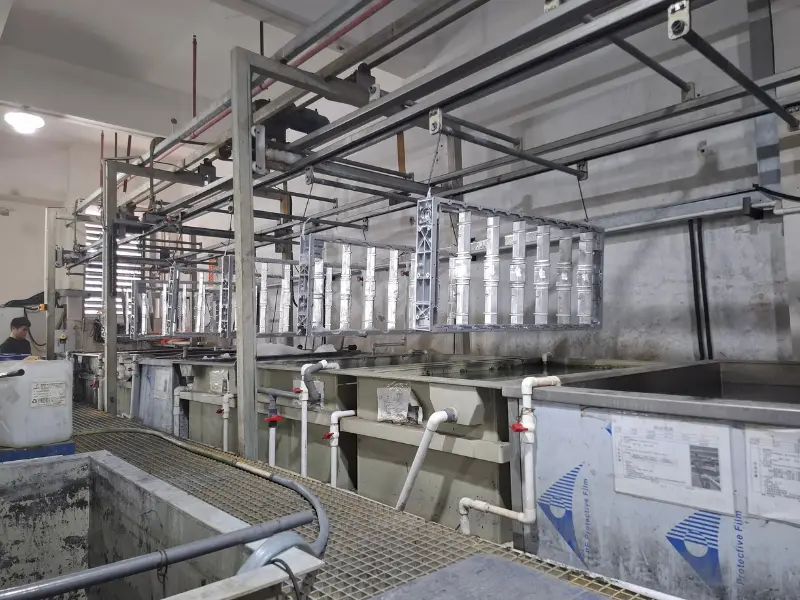
| Surface Treatment | Shot Blasting, Sandblasting, Precision Cleaning (Resolving ADC12 oxidation issues) | Meets high aesthetic and high adhesion requirements |
By integrating this specific dual-stage control sheet, we maintain stable production tolerances across massive manufacturing runs, scaling fluidly from initial prototypes up to long-range die casting production scales.
Hardware Compliance Validation: Eliminating Cross-Border Supply Risks
When shipping critical industrial components to manufacturing hubs across North America, Europe, or Japan, there is absolutely zero room for dimensional drift. We mitigate internal micro-porosity via comprehensive 5-step porosity control treatments while using structural vacuum gates. Our operational system is built to defend your global distribution chains from assembly floor defects.
Every batch shipped from our facility undergoes comprehensive validation checks. Below are the physical quality testing bays that actively secure our industrial production runs daily:
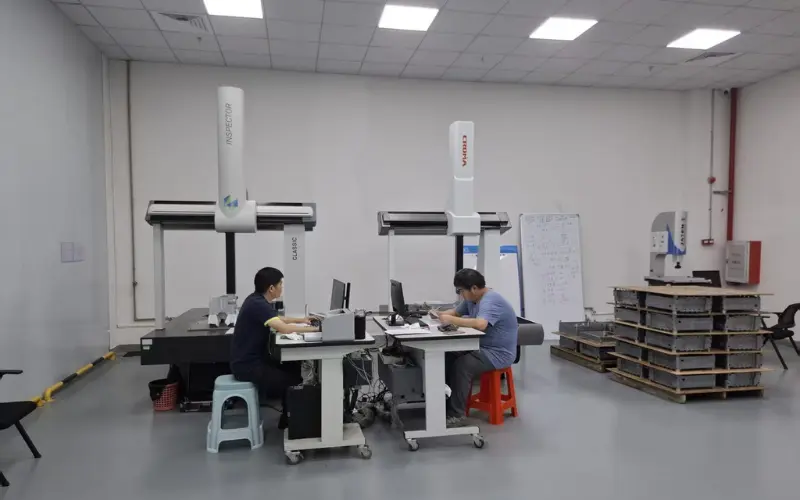 Zeiss CMM Metrology System
Validating complex positional tolerances and geometric constraints on our high-tolerance automotive CNC machining lines.
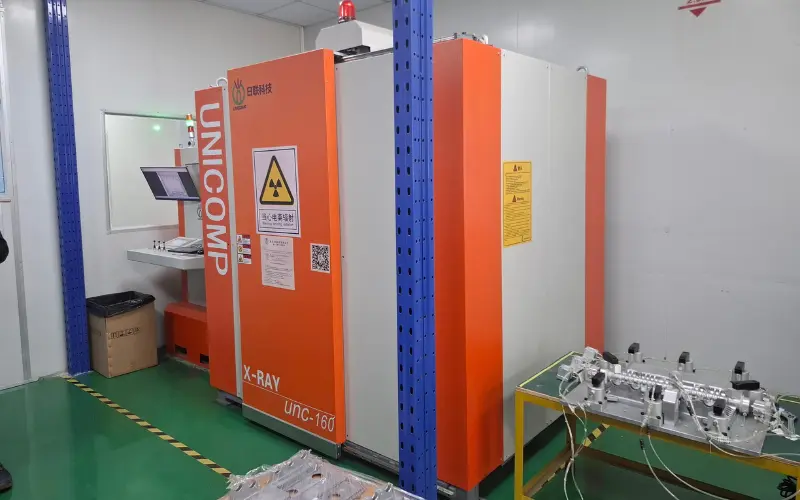 Real-time X-Ray NDT Flaw Detector
Scanning internal casting structures and sub-surface material densities using our dedicated porosity control and X-ray inspection station.
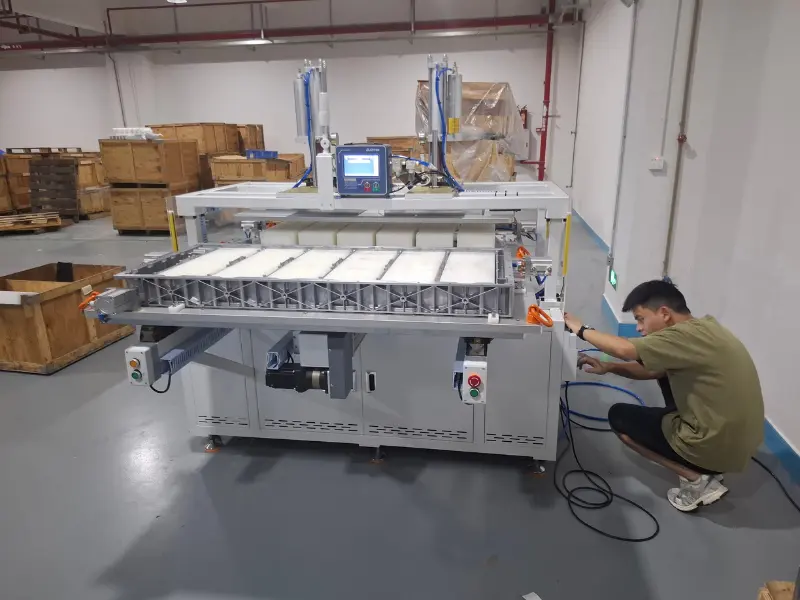 100% Pressure Leakage Testing
Executing critical pressure differential leak verification to safeguard thin-walled oil systems and electronics enclosures from systemic porosity bypass flaws.
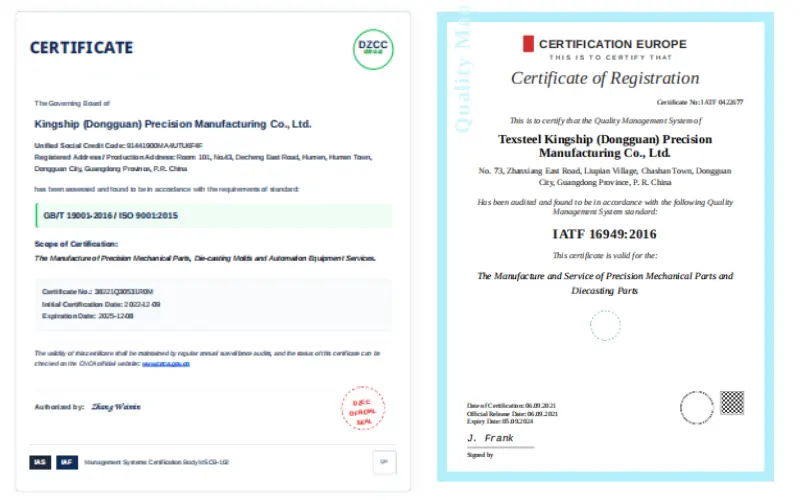 IATF 16949 & ISO 9001 Registered
Strict structural manufacturing compliance protocols, covering our active production floor loops to secure reliable international Tier-1 OEM supply chains.
Direct To Engineering Desk
Frustrated by Sourcing Agents and Delayed Quotes?
Skip the middlemen. Speak directly to the engineers who optimize the tooling layouts and operate the high-speed multi-axis CNC machines. Whether you are battling strict GD&T constraints or trying to minimize thin-wall weight, we provide clear, executable technical feedback.
✓ Strict NDA Compliance:
Your 3D CAD step designs, proprietary engineering data, and intellectual property remain protected under ironclad non-disclosure agreements.
✓ Rapid Engineering Assessment:
Receive an exhaustive DFM diagnostic report alongside commercial cost breakouts within 24 to 48 business hours.
Submit Request for Quote (RFQ)
Q1: Why do some machined ADC12 components warp over time, and how do you prevent it?
A: Warping occurs due to the release of internal residual stress when the outer crust of an aluminum casting is cut away by CNC milling. We prevent this distortion by optimizing our tool fixture designs to disperse clamping pressure evenly, controlling our high-speed feed rates to minimize heat spikes, and executing custom stabilization steps between our rough milling and final precision finishing cuts.
Q2: Can we achieve high-grade anti-corrosion properties on machined ADC12 cast parts?
A: Yes, absolutely. Machined areas expose the base alloy grain structure, which demands specialized environmental shielding. Following multi-axis machining, we offer a comprehensive array of surface finishing options for aluminum castings, including clear chemical conversion chromate coatings, powder coatings, and structural anodizing tailored to protect your components from industrial wear.
Q3: What makes standard ADC12 a better choice compared to premium alloys like A356 for general electronic and motor housing applications?
A: It primarily comes down to balancing structural costs with raw manufacturing flow. As we discuss in our technical analysis on why we recommend A356 over ADC12 for high-stress structural parts, A356 delivers superior mechanical elongation and impact resistance. However, for standard non-structural enclosures, electronics housings, and intricate brackets, ADC12 offers exceptional flow filling capabilities for complex thin walls, while keeping tooling cost significantly lower.
Q4: How do you fundamentally control and eliminate subsurface porosity in ADC12 castings during high-pressure production runs?
A: Subsurface porosity is the absolute enemy of structural integrity and air-leak testing. In our foundry floor loops, we combat this via a multi-layered engineering defense system across critical stages:
First, we implement strict melting and degassing controls. We deploy automatic rotor injection using high-purity argon gas for inline degassing, paired with professional fluxing agents, to drive the hydrogen content in the molten aluminum down below 0.1 cm³/100g. This fundamentally eradicates the breeding ground for hydrogen-induced precipitation pores right at the source.
Second, we utilize advanced MAGMA mold flow analysis software to execute 1:1 digital modeling of our gating systems and overflow launders. By precisely engineering a multi-stage, variable acceleration injection curve, we prevent air entrapment during the initial slow phase, then instantaneously transition—within a window as short as 30 milliseconds at the end of filling—to a high-speed second stage of 4–5 m/s, aggressively pushing residual air into peripheral vacuum venting valves.
Finally, for premium enclosures with ultra-stringent hermetic sealing requirements, we fully deploy ultra-high vacuum-assisted die casting (maintaining cavity vacuum levels below 50 mbar) alongside targeted pinpoint squeeze pins. At the critical moment of volumetric shrinkage as the alloy solidifies, secondary local intensification is applied via a dual-direction hydraulic squeeze. This forcefully crushes and recompresses loose micro-shrinkage voids, ensuring that when our high-speed post-casting CNC cutting heads slice through the hard outer skin, the exposed base metal matrix remains perfectly dense, mirror-smooth, and 100% leak-proof.
Ready to scale your next structural project? Connect with our engineering desk for an authentic technical evaluation.
© 2026 Alumcasting. All Rights Reserved. Built for Global Casting Industry Applications.
Ready to start your project?
Talk to AlumCasting engineers about your casting, machining and tooling requirements.